11 Powerful Hidden Emotional Causes of Chronic Stress and How EFT Tapping Can Help
May 22, 2026

Stress has become so common that many women assume it’s just part of modern life.
The endless to-do lists. The constant pressure. The racing thoughts at night. The feeling that you’re always behind, no matter how much you accomplish.
But what if chronic stress isn’t the real problem?
What if stress is actually a symptom?
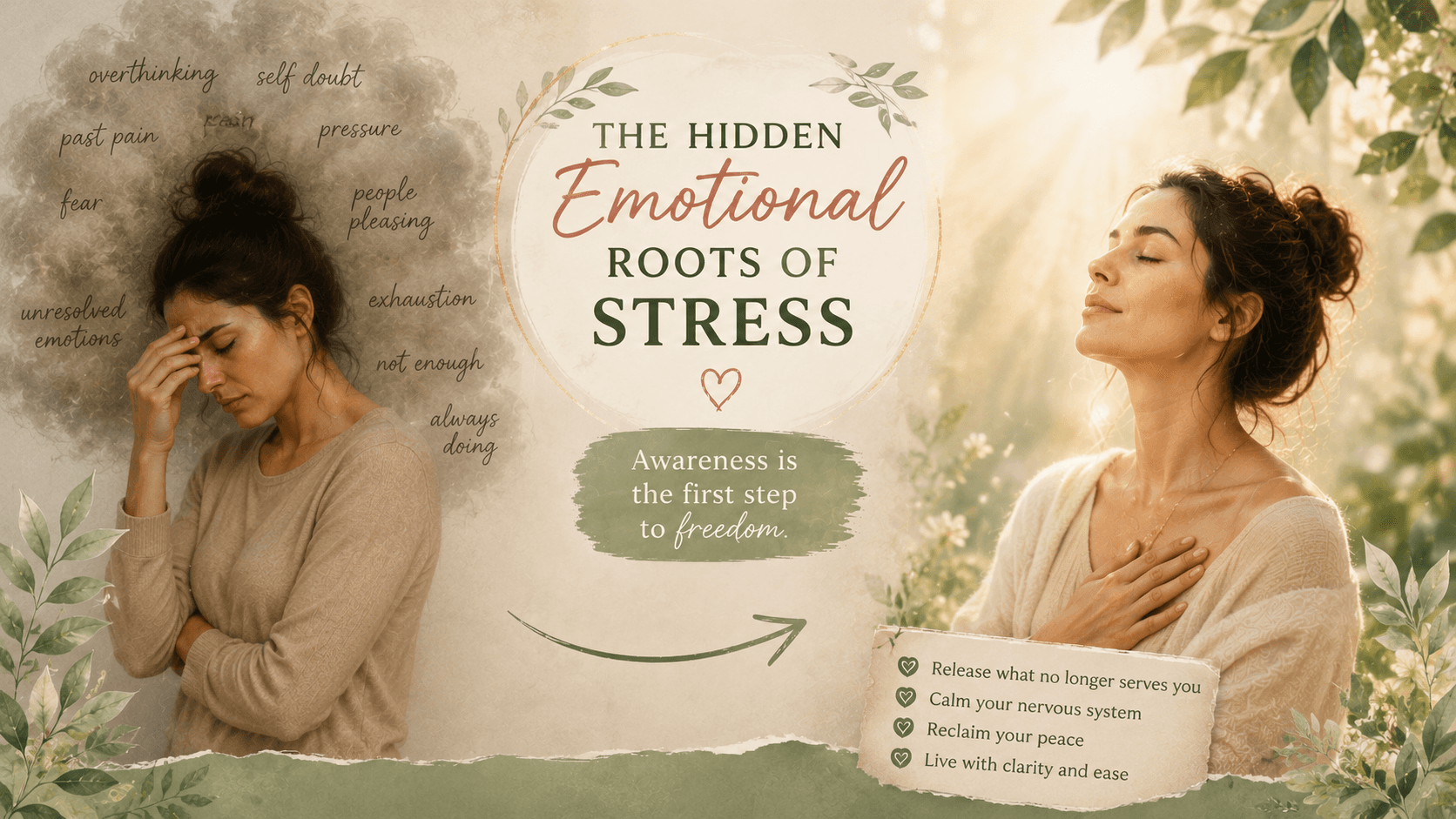
For many women, chronic stress is the body’s way of signaling deeper emotional patterns that have gone unaddressed for years. While healthy stress is a normal part of life, ongoing overwhelm often points to unresolved emotional wounds, limiting beliefs, suppressed feelings, or a nervous system that no longer feels safe.
The good news is that when you begin addressing these deeper emotional layers, healing becomes possible.
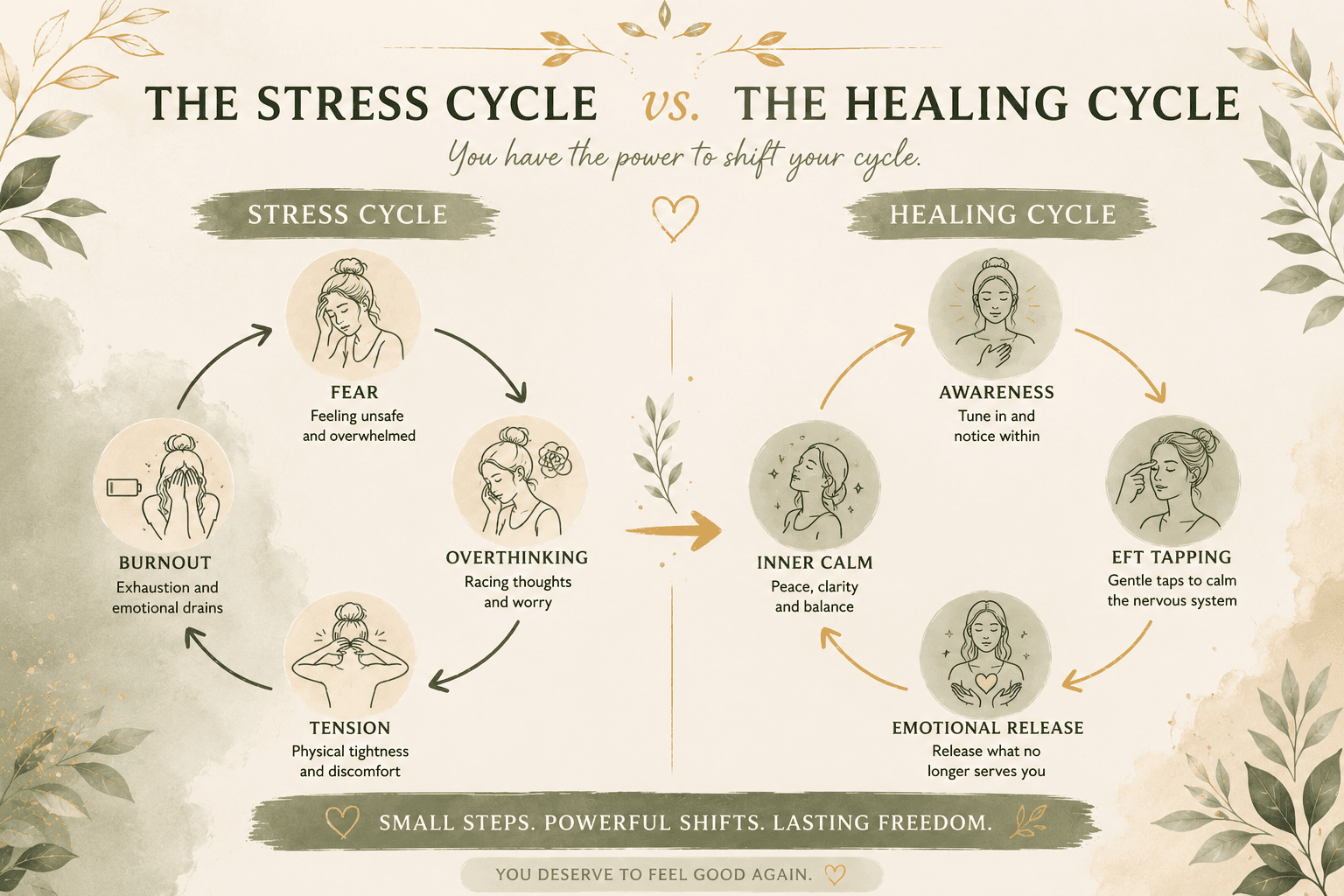
This is where EFT tapping for stress can be incredibly helpful. By combining gentle tapping on acupressure points with focused awareness, EFT helps calm the nervous system while addressing the emotional roots of stress.
In this guide, we’ll explore 11 hidden emotional causes of chronic stress and how EFT may help you begin finding relief.
Why Stress Isn’t Always About What’s Happening Around You
Many people assume stress is caused solely by external events.
Work.
Money.
Relationships.
Family responsibilities.
While these certainly contribute, two people can experience the exact same situation and have completely different stress responses.
Why?
Because the nervous system responds not only to what is happening now but also to what it has learned from the past.
When unresolved emotions accumulate, the body can begin interpreting everyday situations as threats.
This is why true chronic stress relief often requires more than time management, productivity hacks, or vacations.
Sometimes the real solution is emotional healing.
Understanding the Emotional Causes of Stress
Before we explore the 11 hidden causes, it’s important to understand that emotions are not weaknesses.
Emotions are information.
When emotions are ignored, suppressed, or pushed aside for years, the body often carries the burden.
This can show up as:
Anxiety
Burnout
Sleep issues
Muscle tension
Digestive discomfort
Fatigue
Chronic overwhelm
Many practitioners who work with nervous system healing approaches believe emotional awareness is a critical piece of long-term wellness.
1. Suppressed Emotions
Many women learn from an early age to be strong, helpful, and accommodating.
They become experts at caring for everyone else.
But what happens to their own feelings?
Unexpressed sadness, anger, disappointment, and frustration don’t simply disappear.
They often become stored stress.
How EFT May Help
EFT tapping for stress creates a safe space to acknowledge difficult emotions without becoming overwhelmed by them.
2. Chronic People-Pleasing
People-pleasers often feel responsible for everyone else’s happiness.
They say yes when they want to say no.
They avoid conflict.
They sacrifice their own needs.
Over time, this creates emotional exhaustion.
Hidden Belief
“If I disappoint others, I won’t be loved.”
That belief alone can generate enormous stress.
3. Fear of Failure
Many high-achieving women carry intense pressure to succeed.
Every mistake feels dangerous.
Every setback feels personal.
The nervous system remains constantly activated because it never feels safe to relax.
The Cost of Perfectionism
Perfectionism often masquerades as ambition.
In reality, it frequently creates chronic stress and burnout.
4. Unresolved Childhood Experiences
The body remembers what the mind forgets.
Childhood experiences involving criticism, rejection, unpredictability, or emotional neglect can leave lasting imprints on the nervous system.
As adults, these patterns often continue operating beneath conscious awareness.
Why This Matters
You may react to current situations through the lens of old experiences.
This is one reason many women struggle to achieve lasting natural stress relief despite trying numerous wellness practices.
5. Fear of Change
Even positive change can create stress.
Starting a new job.
Launching a business.
Moving house.
Beginning a relationship.
The nervous system often interprets uncertainty as danger.
The Hidden Conflict
Part of you wants growth.
Part of you wants safety.
This internal conflict can create tremendous tension.
6. Constant Self-Criticism
Imagine living with someone who criticized everything you did.
Now imagine that voice lives inside your own mind.
Many women experience relentless self-judgment every day.
This creates ongoing emotional stress that the body never escapes.
7. Lack of Emotional Boundaries
Boundaries protect your energy.
Without them, you absorb everyone else’s emotions, expectations, and problems.
Many sensitive and empathic women unknowingly carry emotional loads that were never theirs to begin with.
Common Signs
Emotional exhaustion
Feeling drained around people
Difficulty saying no
Resentment
8. Unprocessed Grief
Grief doesn’t only occur after losing a loved one.
You may grieve:
Lost opportunities
Failed relationships
Old dreams
Life transitions
Parts of yourself
When grief remains unprocessed, stress often becomes its companion.
9. Feeling Disconnected From Yourself
Many women become so busy taking care of life that they lose connection with their own needs.
They stop asking:
What do I need?
What do I want?
What feels aligned?
This disconnection often creates a persistent sense of inner tension.
10. Living in Survival Mode
Survival mode is one of the most common yet overlooked emotional causes of stress.
In survival mode, your nervous system constantly scans for threats.
Even when life is relatively safe, your body behaves as if danger is around every corner.
Common Symptoms
Hypervigilance
Overthinking
Difficulty relaxing
Poor sleep
Chronic worry
11. Feeling Unsafe in Your Own Body
At the deepest level, many forms of chronic stress stem from a lack of inner safety.
When the body doesn’t feel safe, stress becomes the default setting.
Creating safety is one of the foundations of healing.
This is where many women find EFT tapping for stress particularly valuable because it combines emotional awareness with physical calming techniques.
How EFT Tapping Supports Nervous System Healing
EFT (Emotional Freedom Techniques) combines focused attention with gentle tapping on acupressure points.
Many people report feeling calmer, more grounded, and emotionally lighter after practicing EFT.
Research suggests EFT may help reduce stress and anxiety while lowering cortisol levels in some individuals.
Why Many Women Love EFT
Unlike some approaches that require years of practice, EFT is:
Gentle
Beginner-friendly
Easy to learn
Can be practiced almost anywhere
Focuses on both mind and body
This makes it an appealing tool for those seeking natural stress relief.
A Simple EFT Tapping Practice for Stress
Identify a stressful feeling.
Rate its intensity from 0-10.
Begin tapping on EFT points while acknowledging the emotion.
Take several slow breaths.
Reassess your stress level.
Even a few minutes can help create more awareness and calm.
What Makes Lasting Stress Relief Different?
Many stress management strategies focus on symptoms.
But healing often begins when we explore the underlying emotional patterns.
That’s why understanding the emotional causes of stress can be so powerful.
When awareness meets compassionate action, transformation becomes possible.
Ready to Explore What’s Really Driving Your Stress?
If you’ve been feeling overwhelmed, exhausted, stuck in survival mode, or trapped in cycles of worry, you don’t have to figure it all out alone.
Sometimes a compassionate conversation can reveal patterns you may not even realize are contributing to your stress.
Wondering whether EFT can help your specific situation?

Book a FREE 30-minute EFT Coaching Call and let’s explore what’s really driving your stress.
Together we can identify the emotional patterns behind the overwhelm and discuss whether EFT may be a good fit for your healing journey.